

Most homeowners think about their HVAC system when it breaks down, not before. Air ducts and dryer vents work quietly in the background, and buildup inside them tends to go unnoticed until it starts affecting air quality, energy bills, or worse, becomes a fire hazard. Dryer vent cleaning in Beaverton, OR is one of the more overlooked home maintenance tasks, even though it directly affects both safety and efficiency.
Beaverton’s mix of older and newer housing stock means duct systems vary widely in age and condition, and homes that run heat or air conditioning for much of the year accumulate dust and debris faster than many realize. Lint buildup in dryer vents adds another layer of risk that’s specific to how often a household does laundry.
This article covers why duct and vent buildup happens, the warning signs to watch for, and what a professional air duct cleaning actually involves.
Why Air Ducts and Dryer Vents Need Regular Cleaning
Every time a furnace or air conditioner runs, it circulates dust, pet dander, and other particles through the ductwork. Over time, that debris settles inside the ducts rather than blowing back out, and it accumulates especially at bends, seams, and near vent openings.
Dryer vents face a more specific problem: lint. Even with a clean lint trap, small amounts of lint escape into the vent line with every load of laundry. Over months and years, that lint narrows the vent’s airflow path, and in some cases lint accumulates enough to become a genuine fire hazard.
According to the U.S. Environmental Protection Agency, indoor air pollutant levels can run two to five times higher than outdoor levels, and occasionally more than 100 times higher in specific situations. Ductwork that hasn’t been cleaned in years is one of the contributing factors, since it can recirculate trapped dust and allergens every time the system runs.
Warning Signs You Need Duct or Vent Cleaning
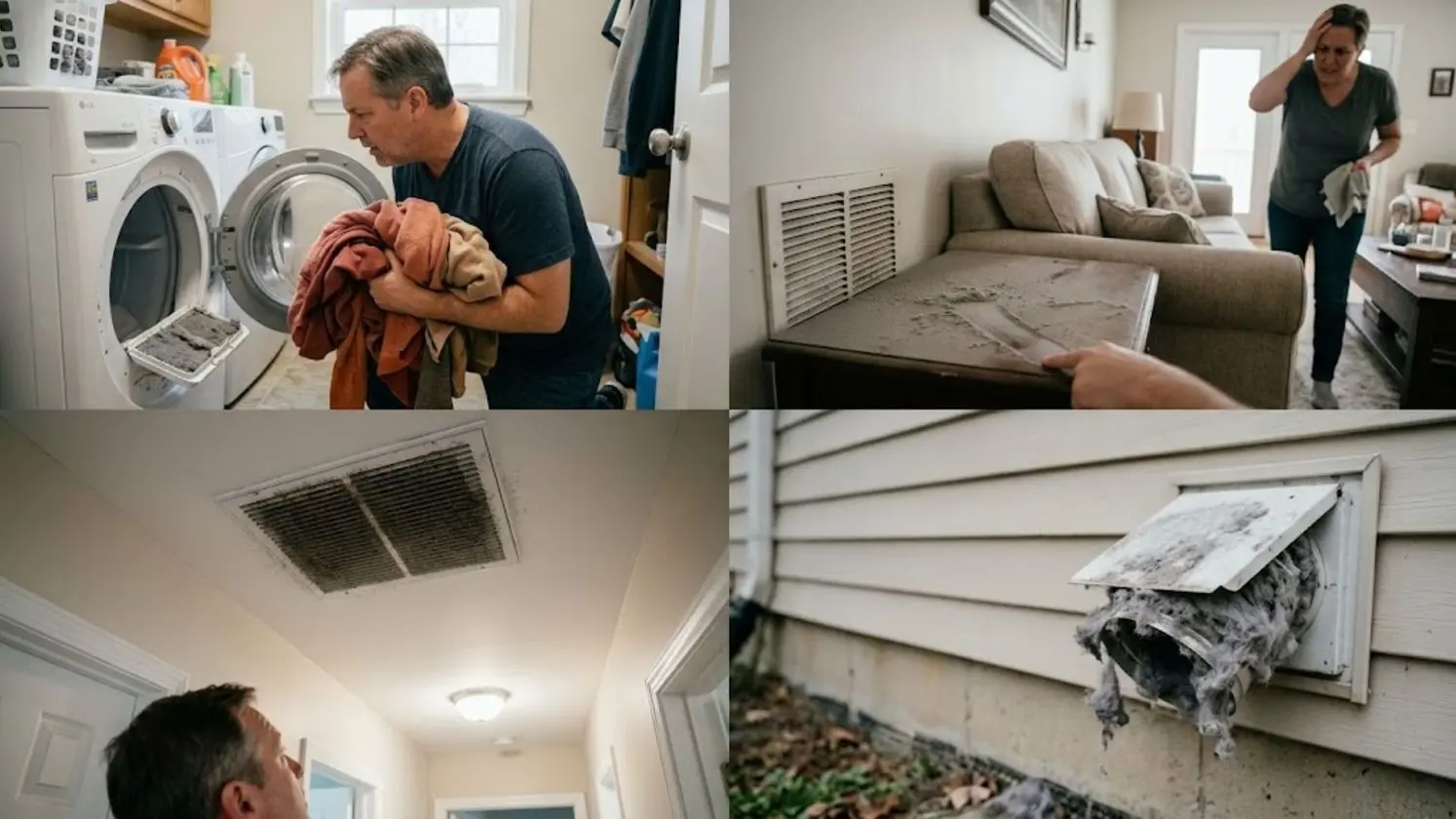
Some signs point specifically to air ducts, while others point to dryer vents. Watch for these indicators:
- A dryer takes longer than usual to dry a load, or clothes come out hotter than normal at the end of a cycle.
- A burning smell when the dryer runs, which can indicate lint buildup near the heating element or vent line.
- Visible lint around the dryer vent opening outside your home, or a vent flap that doesn’t open freely.
- Increased dust on furniture and surfaces shortly after cleaning, even with regular vacuuming.
- Uneven heating or cooling between rooms, which can point to restricted airflow in the ducts.
- Higher than expected energy bills, since restricted airflow forces HVAC systems to work harder.
- Household members with worsening allergy or respiratory symptoms while at home.
If you notice more than one of these signs, it’s worth scheduling an air duct inspection before the issue affects safety or comfort further.
The Fire Risk Behind Dryer Vent Buildup
Lint is highly flammable, and a clogged dryer vent traps heat that would otherwise vent outside. This combination is a leading cause of home dryer fires nationally, which is part of why dryer vent cleaning is treated as a safety task rather than a purely cosmetic one. Vent length, the number of bends in the line, and how frequently a household does laundry all affect how quickly lint builds up to a concerning level.
How Professional Duct and Vent Cleaning Works
The RamAir System
Carpet Savers uses the RamAir system for air duct and dryer vent cleaning. It uses compressed air to loosen debris throughout the ductwork, paired with a self-propelled jet hose that reaches sections standard tools can’t access. The system operates as a closed loop with sealed exit points, so loosened debris is contained and pulled out with vacuum suction rather than pushed further into the home.
Because the RamAir system has no brushes or moving parts inside the ducts, it avoids scratching or tearing ductwork, which is a risk with older brush-based cleaning methods.
What the Process Looks Like
A typical visit includes an inspection of accessible duct runs and the dryer vent line, followed by the cleaning process itself, and a final check to confirm airflow has improved. For dryer vents specifically, the technician clears the full vent path from the dryer connection to the exterior exit point, not just the portion closest to the machine.
Benefits of Regular Duct and Vent Cleaning
- Improved indoor air quality, with less circulated dust, pet dander, and allergens.
- Better HVAC efficiency, since clean ducts let air move without added strain on the system.
- Extended equipment lifespan, as reduced strain means less wear on the furnace or air handler over time.
- Faster dryer cycles, since unobstructed vents let hot, moist air escape efficiently.
- Reduced fire risk, particularly from lint accumulation in the dryer vent line.
How Often Should You Schedule Cleaning?
Dryer vents typically benefit from annual cleaning, though households doing frequent laundry or those with pets that shed heavily may need it more often. Air ducts don’t need cleaning as frequently, generally every few years, unless the home has undergone renovation work, has pets, or someone in the household has allergy or respiratory sensitivities that make cleaner air a higher priority.
Working With Carpet Savers for Duct and Vent Cleaning in Beaverton
Carpet Savers has served Beaverton, Hillsboro, Tigard, and the wider Portland metro area for more than 15 years, using the RamAir system to clean air ducts and dryer vents safely and thoroughly. If you’re also due for a refresh elsewhere in the home, our carpet cleaning service pairs well with duct cleaning as part of a broader seasonal maintenance visit.
Frequently Asked Questions
How do I know if my dryer vent needs cleaning?
Longer dry times, a burning smell during cycles, and visible lint at the outside vent opening are the clearest signs. If you notice any of these, it’s worth scheduling a cleaning before the buildup becomes a fire hazard.
Is dryer vent cleaning really necessary every year?
For most households, yearly cleaning keeps lint buildup from becoming a safety issue. Larger households or homes with long, winding vent lines may need it more often.
Will duct cleaning fix my uneven heating or cooling?
It can help if restricted airflow from dust buildup is the cause, though not all uneven heating issues are duct-related. An inspection can determine whether ducts are contributing to the problem.
Does duct cleaning damage the ductwork?
Not when done with the right equipment. The RamAir system Carpet Savers uses has no brushes or moving parts inside the ducts, which reduces the risk of scratching or tearing compared to older cleaning methods.
Can dirty air ducts affect allergies?
Yes, ducts that haven’t been cleaned can recirculate dust, pet dander, and other allergens throughout the home. Reducing that buildup often brings noticeable relief for household members with sensitivities.
Protect Your Home’s Air and Efficiency
Air ducts and dryer vents rarely get attention until something goes wrong, but regular cleaning heads off both safety risks and efficiency losses before they show up on an energy bill or, worse, as a fire hazard. Keep an eye on the warning signs above between service visits.
One easy habit: clean the lint trap before every load and check the outside vent flap periodically to confirm it opens freely. When it’s time for a thorough cleaning, Carpet Savers provides dryer vent and air duct cleaning throughout Beaverton, OR using the RamAir system. Call for a free quote.