

A sofa that looked brand new a few years ago can start to show its age fast once kids, pets, and daily life settle in. Cushions flatten, armrests darken, and fabric starts holding onto smells that no amount of air freshener fixes. Regular vacuuming helps, but it only lifts surface dust, not the oils, allergens, and ground-in debris that settle deep into the fibers.
Upholstered furniture is one of the most-used, least-cleaned surfaces in a home. A couch gets sat on daily, sneezed near, and used for snacks and naps, yet most households clean it far less often than carpet or floors. Over time that buildup affects both the look of the furniture and the air quality in the room.
This article covers what professional upholstery cleaning involves, the fabric types that respond differently to cleaning, common issues Beaverton homeowners run into with their furniture, and how to decide between a DIY approach and calling in a professional. Our team offers upholstery cleaning as part of our regular service lineup, so this is also a look at how that process actually works.
What Professional Upholstery Cleaning Involves
Professional upholstery cleaning starts with identifying the fabric before any product touches it. Natural fibers like cotton and linen react differently to moisture and cleaning agents than synthetic blends or leather, so the wrong approach can cause shrinking, discoloration, or watermarking.
Once the fabric type is confirmed, the piece is vacuumed thoroughly to remove loose dirt, pet hair, and dust before any liquid cleaning begins. Skipping this step and going straight to wet cleaning just turns surface debris into mud that works its way deeper into the cushion.
From there, a cleaning solution suited to the fabric is applied, agitated to lift embedded soil, and extracted along with the loosened dirt. The goal is to pull moisture and debris back out rather than leaving the fabric saturated, which helps the piece dry faster and reduces the risk of mildew forming inside the cushion fill.
Common Upholstery Problems in Beaverton Homes
The Pacific Northwest’s damp, mild climate creates a few recurring issues for upholstered furniture that are worth watching for.
Musty Odors from Moisture
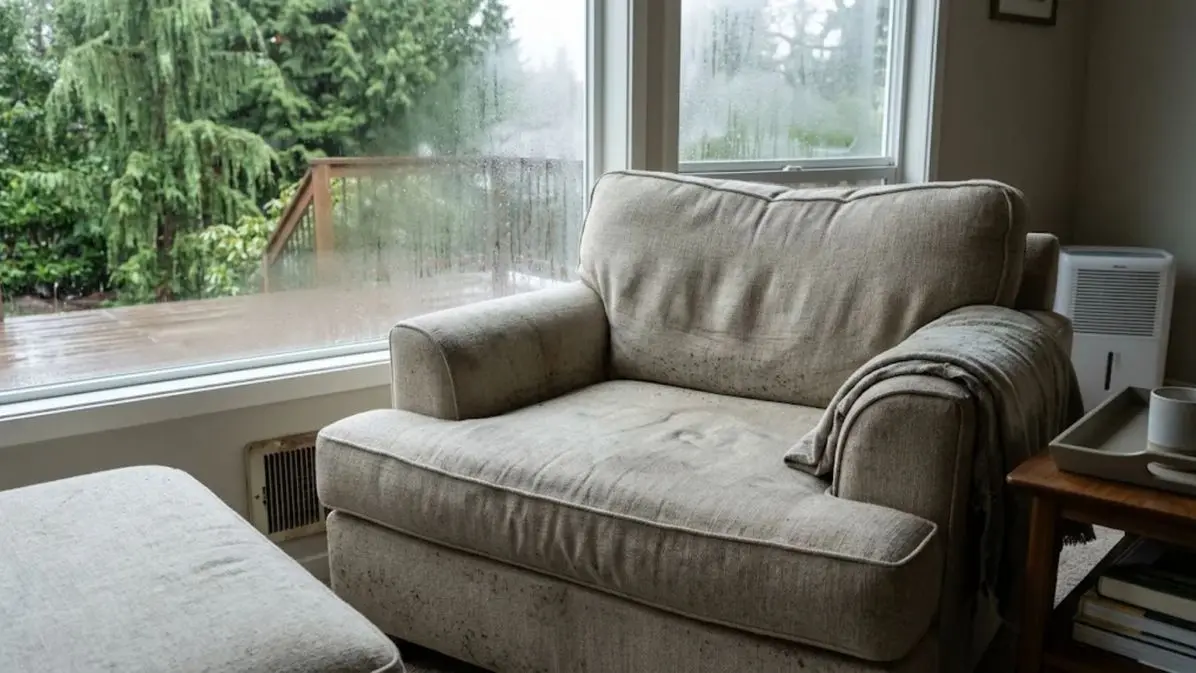
Beaverton’s humid stretches, especially in fall and winter, make it easier for moisture to linger in thick cushions and fabric weave. If a couch sits near a drafty window or in a room with limited airflow, that trapped dampness can lead to a musty smell even when the furniture looks clean on the surface. Odor that persists after airing out the room is usually a sign the moisture has reached the padding underneath the fabric, not just the top layer.
Pet Hair and Dander
Homes with dogs or cats often see dander and hair work into the weave of upholstery fabric, particularly on cushions and armrests where pets rest most. Regular vacuuming with a pet-hair attachment helps, but dander trapped deep in foam cushions typically needs extraction cleaning to fully remove.
Everyday Spills and Stains
Coffee, wine, food, and kids’ messes are the most common stains on living room furniture. Fresh spills respond well to blotting and mild cleaning, but stains left to set can bond with the fabric fibers and become much harder to lift without professional-grade extraction.
Fabric Types and How Cleaning Methods Differ
Not all upholstery fabric responds to cleaning the same way, which is why matching the method to the material matters.
- Cotton and linen blends: Generally tolerate water-based cleaning well but can watermark or shrink slightly if over-saturated, so controlled moisture application is important.
- Synthetic fabrics (polyester, microfiber, olefin): Hold up well to most cleaning methods and resist staining better than natural fibers, though microfiber can mat or pile if scrubbed too aggressively.
- Leather and faux leather: Requires cleaning products made specifically for leather; standard upholstery cleaners can dry out or crack the surface over time.
- Delicate or specialty fabrics (silk blends, velvet): Often need gentler, low-moisture methods to avoid crushing the pile or damaging the weave.
- Checking furniture tags for cleaning codes, or having a professional identify the fabric, helps avoid using the wrong method on a piece that needs a gentler touch.
Benefits of Professional Upholstery Cleaning
Beyond restoring appearance, professional cleaning offers a few practical benefits that regular vacuuming can’t match:
- Removes allergens and dust mites that build up in cushion fill and fabric weave over time
- Extracts oils and residue from skin contact that cause fabric to darken in high-use spots
- Lifts set-in stains that have already bonded with the fibers
- Reduces musty odors caused by trapped moisture rather than just masking them
- Extends the usable life of furniture by keeping fibers and padding in better condition
DIY vs. Professional Cleaning: When to Call a Professional
Light surface cleaning, like spot-treating a fresh spill or vacuuming regularly, is reasonable to handle on your own with the right fabric-appropriate products. The risk comes with deeper cleaning, where over-wetting a cushion, using the wrong solution for the fabric type, or scrubbing too hard can cause shrinking, bleeding colors, or permanent texture changes.
A professional approach is usually the better call when a stain has already set, when there’s a persistent odor that cleaning the surface hasn’t resolved, or when the fabric is a delicate or unfamiliar type. Extraction equipment that pulls moisture and soil back out, rather than pushing it deeper into the cushion, makes a meaningful difference on furniture that’s seen years of regular use.
Caring for Your Furniture Between Cleanings
A few habits help upholstery stay cleaner longer between professional cleanings:
- Vacuum cushions and crevices weekly to prevent dust and pet hair from settling deep into the fabric
- Blot spills immediately rather than rubbing, which can spread the stain and push it further into the fibers
- Rotate and flip reversible cushions periodically to even out wear
- Keep furniture out of direct, prolonged sun exposure to slow fading
- Use arm covers or throws on high-contact areas like armrests and headrests
If a home has also had carpet cleaned recently or is dealing with similar fabric concerns on area rugs, the same care principles generally apply across soft furnishings in the house.
Frequently Asked Questions
How Often Should Upholstery Be Professionally Cleaned?
Most households benefit from professional upholstery cleaning every twelve to eighteen months, though homes with pets, kids, or heavy daily use often need it closer to the one-year mark. Furniture that sees light use in a guest room can usually go longer between cleanings.
Can Professional Cleaning Remove Old, Set-In Stains?
Many set-in stains respond well to extraction cleaning, though success depends on the stain type, how long it’s been there, and the fabric. Some stains, particularly from dyes or certain inks, may lighten significantly without fully disappearing.
Will Cleaning My Upholstery Get Rid of Pet Odor?
Professional cleaning addresses odor that’s trapped in the fabric and cushion fill, which is usually the source of lingering pet smell. If the odor is coming from the furniture frame or padding itself rather than the fabric, additional treatment may be needed.
How Long Does Upholstery Take to Dry After Cleaning?
Drying time typically ranges from a few hours to most of a day, depending on the fabric, cushion density, and airflow in the room. Keeping windows open or a fan running nearby speeds up the process.
Is Professional Upholstery Cleaning Safe for Pets and Kids?\
Cleaning solutions used for upholstery are selected based on fabric compatibility, and furniture is generally safe to use again once fully dry. It’s a good idea to ask about drying time and any specific precautions for the products used on your piece.
Final Thoughts on Upholstery Cleaning in Beaverton, OR
Upholstered furniture takes on a lot of daily wear that isn’t always visible until odors, stains, or discoloration set in. Regular vacuuming keeps surface dust down, but the oils, allergens, and moisture that work into cushion fill need a deeper extraction process to fully clear out. Beaverton’s damp climate makes trapped moisture and musty odors a particularly common issue worth staying ahead of.
If your furniture is holding onto odor, showing set-in stains, or just hasn’t been deep cleaned in a while, our team provides upholstery cleaning services for homes throughout the Beaverton, OR area. Reach out to talk through your fabric type and the specific issues you’re seeing, and we’ll walk you through the right approach for your furniture.