

A dog scratching at a door or a cat sharpening its claws on a corner can leave carpet looking like it needs full replacement within minutes. Frayed edges, pulled loops, and small holes tend to show up in the same few spots, usually near doors, under windows, or anywhere a pet waits and watches. The good news is that most of this damage can be repaired without tearing out the whole room.
Pet-related carpet damage is one of the most common repair calls for homes with dogs and cats, and it’s rarely limited to one isolated spot. Scratching at the same doorway over months can wear a visible track, while chewing or digging in a corner can pull threads loose across a wider area than it first appears. Professional pet damage carpet repair in Beaverton, OR, can address these issues and restore the carpet without requiring a complete replacement.
This article covers the types of pet damage that are typically repairable, how the repair process works, when replacement makes more sense than repair, and how to reduce the chances of it happening again. Our team repairs pet-damaged carpet as part of our regular carpet services, and this breaks down what that process actually involves.
Common Types of Pet Damage
Pet damage tends to fall into a few recurring categories, each with a different repair approach.
1. Scratch Marks and Frayed Fibers
Dogs scratching at doors or cats testing their claws on carpet edges leave frayed, pulled fibers rather than a clean hole. The carpet backing is often still intact underneath, which usually makes this type of damage straightforward to repair by resetting or replacing the affected fiber section.
2.Small Holes and Chew Marks
Chewing, digging, or repeated scratching in one spot can eventually wear through to the carpet backing, creating a small hole. These are typically fixed with a patch cut from a matching remnant, if one is available, or from an inconspicuous area of the same carpet.
3. Pulled Loops and Snags
Loop-style carpet is especially prone to snagging on claws, which pulls individual loops out of place and leaves a visible run across several inches. This type of damage is often repairable by trimming or resetting the pulled loops without needing a full patch.
How Carpet Repair Works
Most pet damage repair starts with assessing how far the damage extends beneath the surface, since fraying or holes can sometimes affect more of the backing than is visible at a glance. Repairing only the surface fibers without checking the backing underneath can lead to the same spot failing again later.
For small frays and pulled loops, the fix often involves trimming damaged fibers and resetting the pile so the repair blends with the surrounding carpet. For holes or more significant damage, a patch is cut to match the pile direction and color of the existing carpet, then fitted and secured into the damaged area.
A well-done repair should be difficult to spot once finished, particularly if there’s leftover carpet or a remnant piece from the original installation to use for patching. Without a matching remnant, color and texture matching becomes more challenging, especially on carpet that’s faded somewhat with age.
When Repair Makes Sense vs. When to Consider Replacement
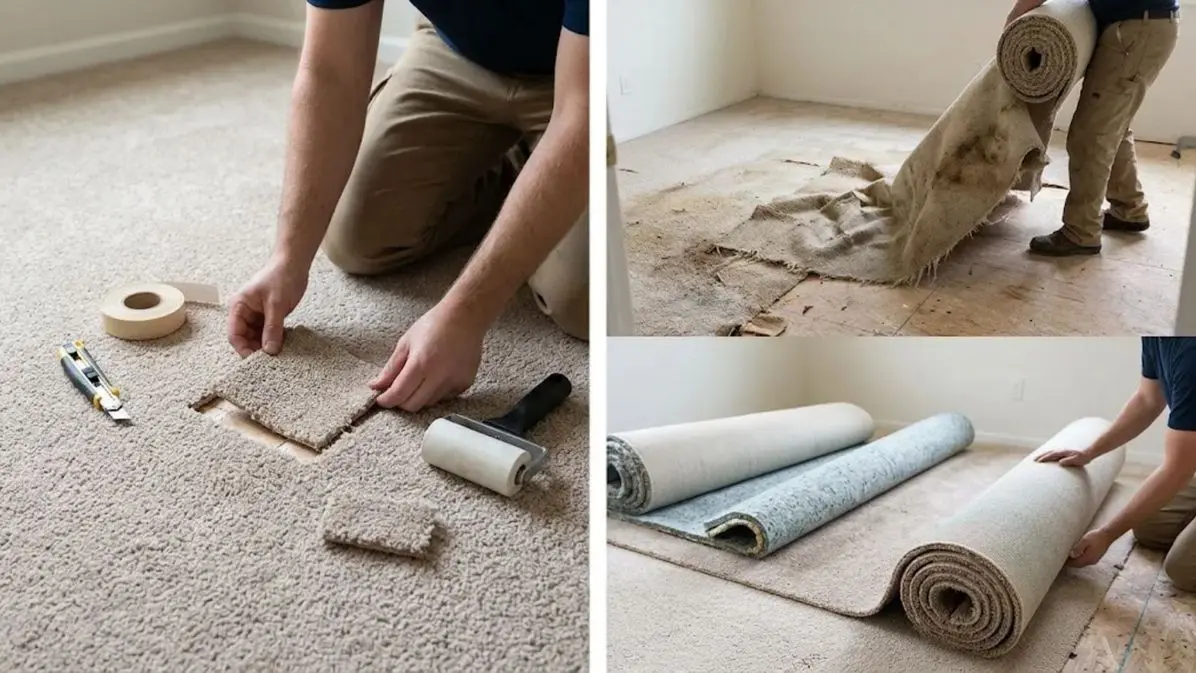
Repair is usually the right call when damage is limited to one or a few isolated spots and there’s enough matching carpet, either a stored remnant or a less visible area, to patch from. Repair also tends to be the more practical option when the rest of the carpet is still in good condition and only the pet-damaged section is holding it back.
Replacement becomes the more sensible route when damage is spread across multiple areas, when there’s no usable remnant to patch with and the color has faded significantly, or when the carpet is already near the end of its expected lifespan for other reasons. In those cases, a full repair can end up costing more than it’s worth if the rest of the carpet will need replacing soon anyway.
Preventing Future Pet Damage
A few adjustments can reduce how often pet damage happens going forward:
- Trim pets’ nails regularly to reduce scratching intensity at doors and corners
- Place a mat or rug runner in high-scratch spots like entry doors and window perches
- Address anxiety-driven scratching or chewing behavior, since it often targets the same areas repeatedly
- Keep carpet near pet feeding and resting areas cleaned promptly to avoid combining damage with staining
- Consider a berber or tighter-loop carpet style in pet-heavy areas if damage keeps recurring in the same spot
Related Carpet Care Worth Considering
Repaired carpet often benefits from a cleaning treatment afterward, since the patch or repaired section can look slightly different in texture or color until it’s cleaned and settles in with the rest of the carpet. If the same room has ongoing odor concerns from pet accidents, pairing a repair with a deeper cleaning addresses both the physical damage and the smell at the same time.
Frequently Asked Questions
Can Carpet With a Hole From a Pet Actually Be Repaired?
Yes, small to moderate holes are often repairable with a patch cut from a matching remnant or an inconspicuous section of the same carpet. The feasibility depends on how much matching material is available and how large the hole is.
How Much Does Pet Damage Carpet Repair Typically Cost?
Cost depends on the size and type of damage, whether a remnant is available for patching, and how much labor the repair requires. A professional assessment is the most accurate way to get a cost estimate for a specific situation.
Will a Repaired Spot Be Noticeable?
A well-matched patch using carpet from the same dye lot or a close color match is often hard to spot once finished. Noticeable mismatches usually happen when there’s no original remnant and the existing carpet has faded over time.
Is It Better to Repair or Replace Carpet With Pet Damage?
Repair makes sense when damage is isolated and matching material is available; replacement makes more sense when damage is widespread or the carpet is already near the end of its lifespan. A quick in-person look at the damage usually makes the right choice clear.
Can Pet Odor Be Removed at the Same Time as a Repair?
Odor treatment and physical repair are two separate steps, but they’re often handled together since they frequently affect the same area. Addressing both at once helps the room feel fully refreshed rather than just visually repaired.
Final Thoughts on Pet Damage Carpet Repair in Beaverton, OR
Pet-related carpet damage, whether it’s a frayed doorway, a small chewed hole, or pulled loops near a window perch, is usually more fixable than it first appears. Catching it early, before fraying spreads or a small snag turns into a larger pulled section, keeps repair on the table instead of replacement.
If your Beaverton home has carpet showing scratch marks, holes, or frayed spots from a pet, contact our team for professional carpet repair in Beaverton, OR. We’ll assess the damage and determine whether a patch or another repair method is the best fit for your carpet. Reach out today to discuss your repair needs and restore your carpet without the cost of full replacement.